CNC Machines Hydraulic Fixtures
CNC Machine Types
Common CNC machines include milling, lathe, drilling, laser cutting, grinding, water jet, plasma cutting, and electrical discharge machines. Milling machines cut materials using rotating tools for versatile shaping, while lathes rotate workpieces for turning operations. Advanced variants like 6-axis or 7-axis models handle intricate geometries in aerospace and automotive parts.
Hydraulic Fixtures
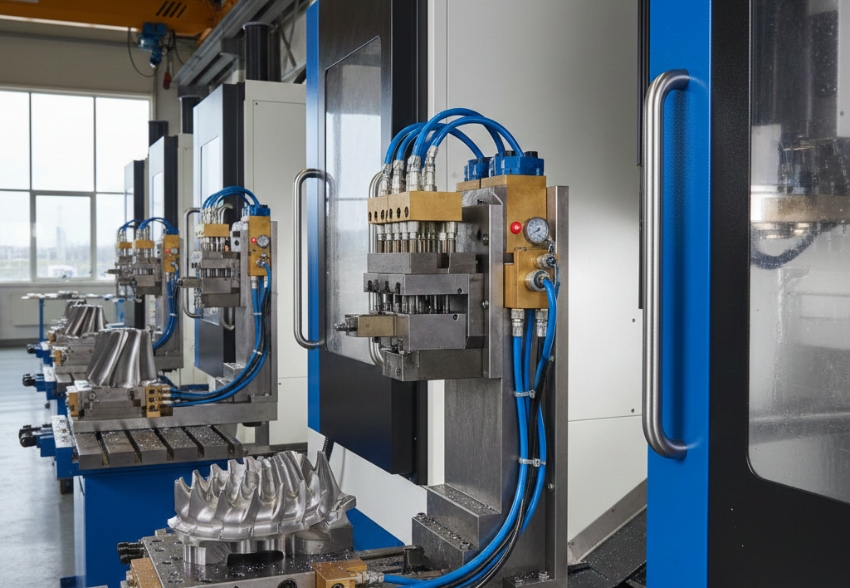
Hydraulic fixtures apply pressurized fluid for consistent clamping, ideal for high-volume production in automotive or aerospace sectors. They reduce setup time, maintain stability under heavy forces, and offer precise control to prevent workpiece movement. Maintenance is higher due to the power source, but they boost productivity and repeatability.
Mechanical Jigs & Fixtures
Mechanical jigs guide tools for operations like drilling or reaming, ensuring accuracy in batch production. Fixtures hold workpieces steady during milling, turning, or grinding, using clamps, locators, and supports for stability. Jigs suit tool guidance in manual setups, while fixtures excel in CNC for robust, repeatable positioning of heavy parts